Stride
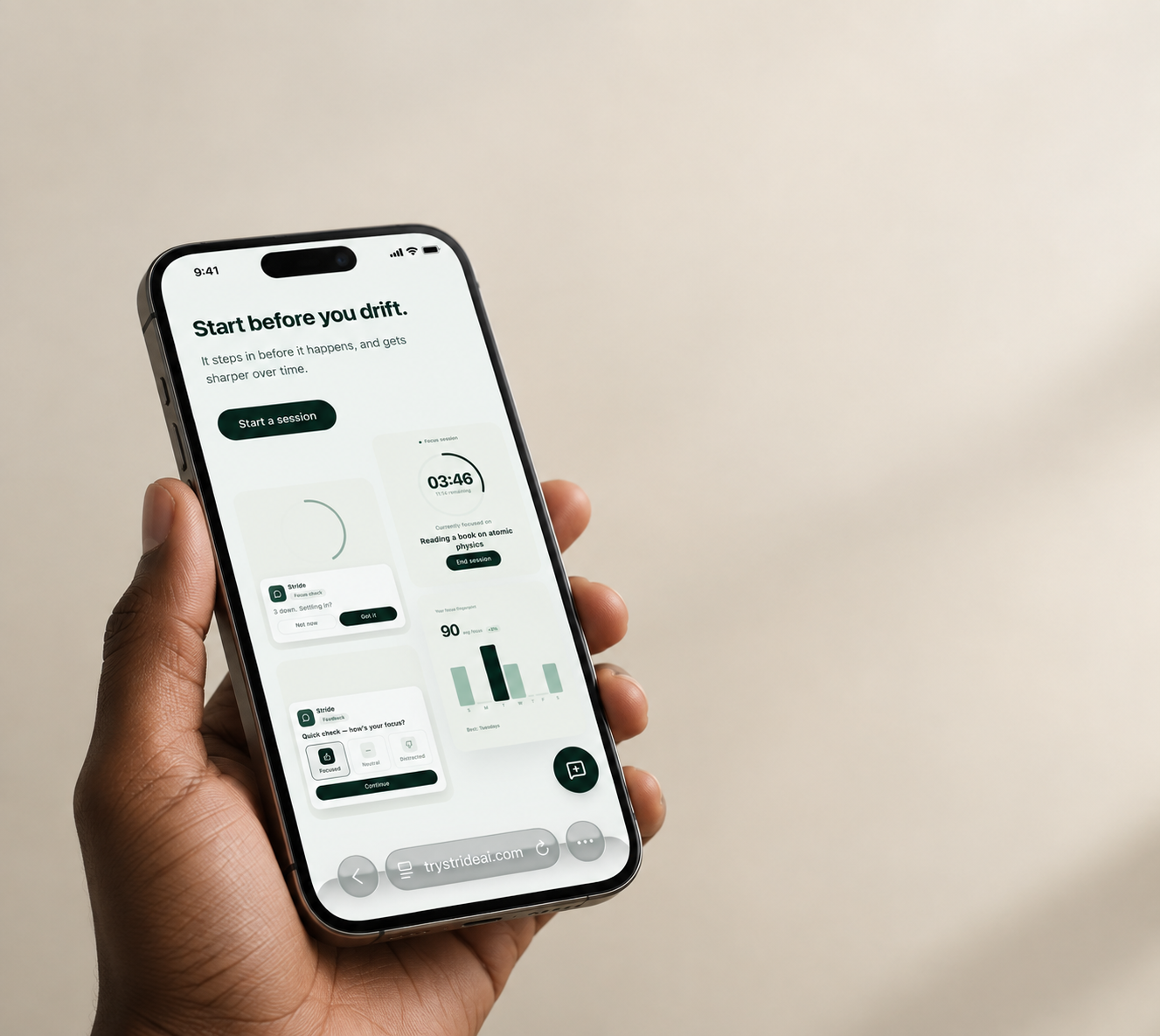
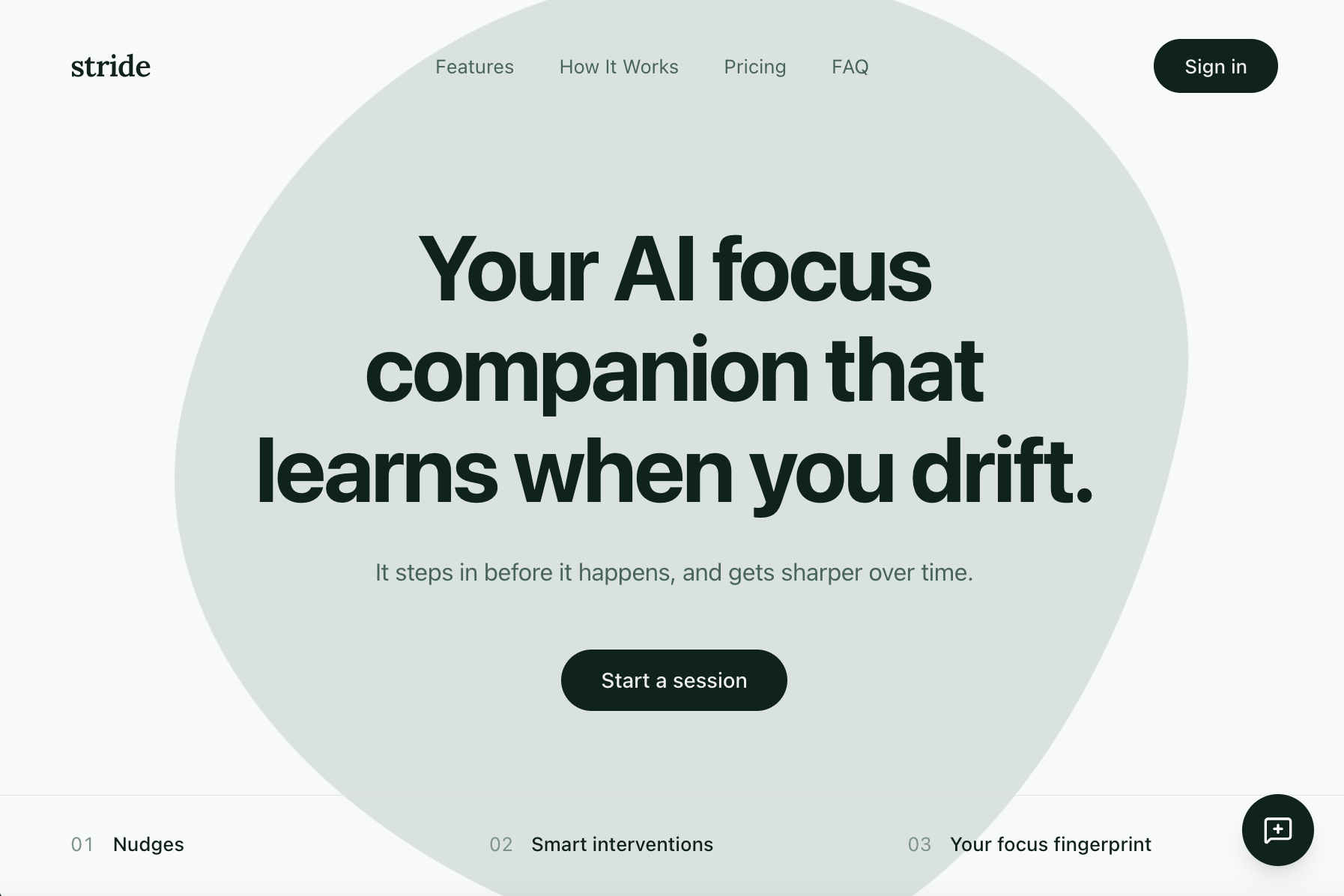
See the highlights of this website.
Colour palette
This website uses a colour palette of 2 colours.
Technologies & tools
The project
We designed and built Stride, an AI-powered focus companion that learns how people work, identifies moments of attention drift, and delivers timely interventions to help them stay focused.
The brief
Making focus more responsive
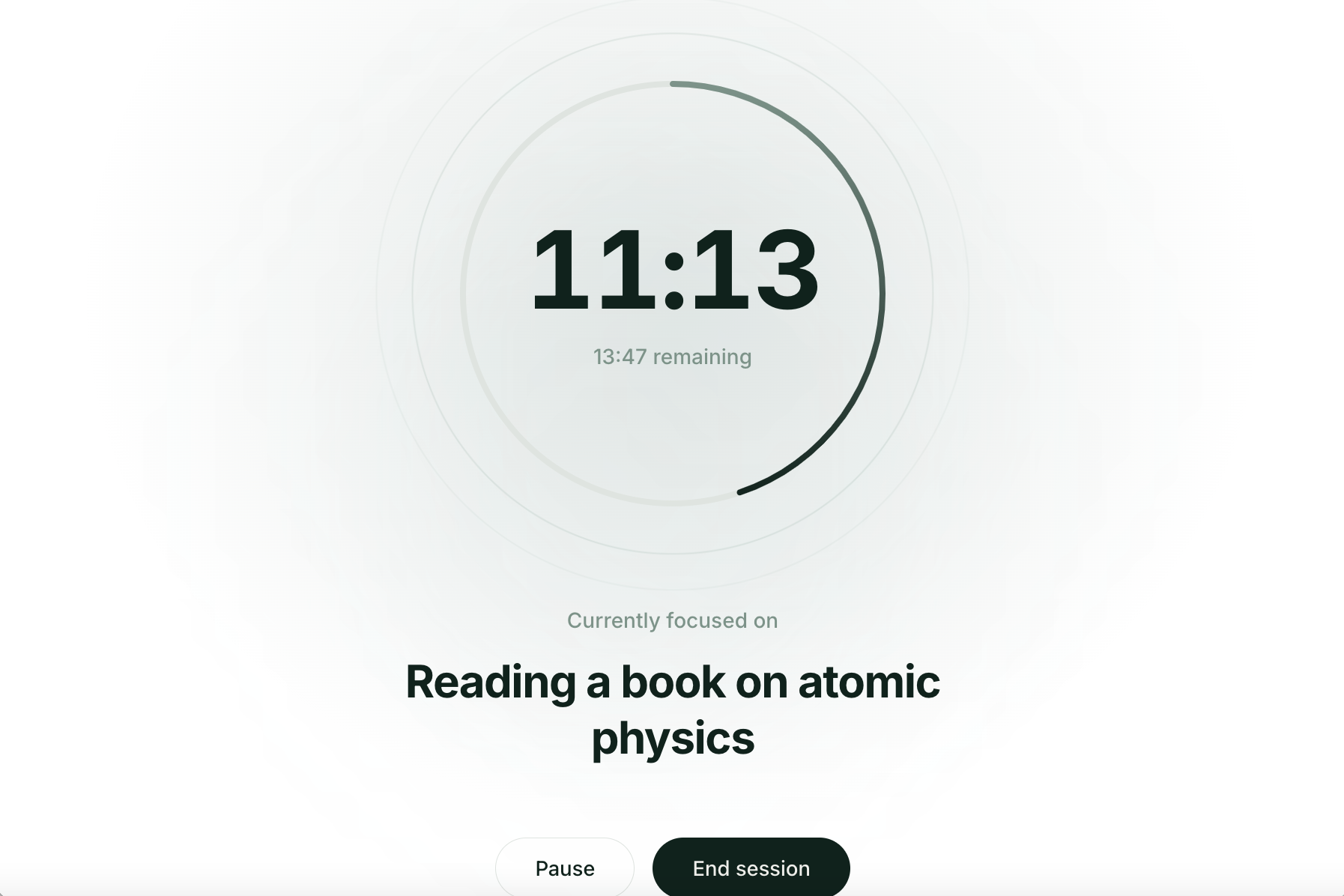
The client wanted to move beyond the usual productivity timer and create something that could respond to how a person actually works. Instead of simply counting down a session, Stride needed to understand what was happening during it and use that information to make future sessions more useful.
The experience had to stay simple enough to use every day, while the intelligence behind it could handle the more complex parts.
Discovery & direction
Understanding what happens between start and stop
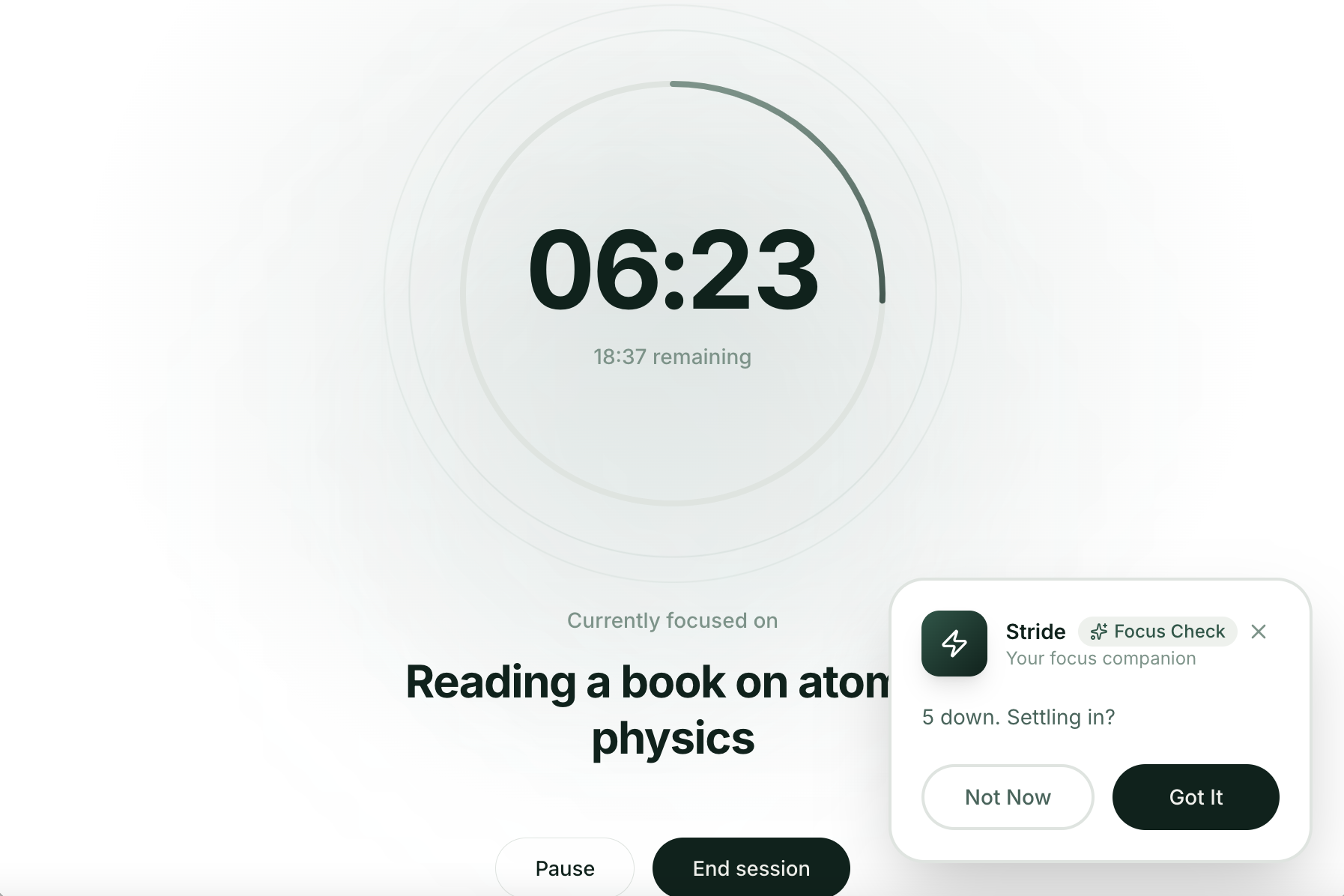
We looked at the different moments within a focus session, from getting started and settling into a task to losing momentum or drifting away. This helped shape the product around three core behaviours: sessions, timely nudges and interventions.
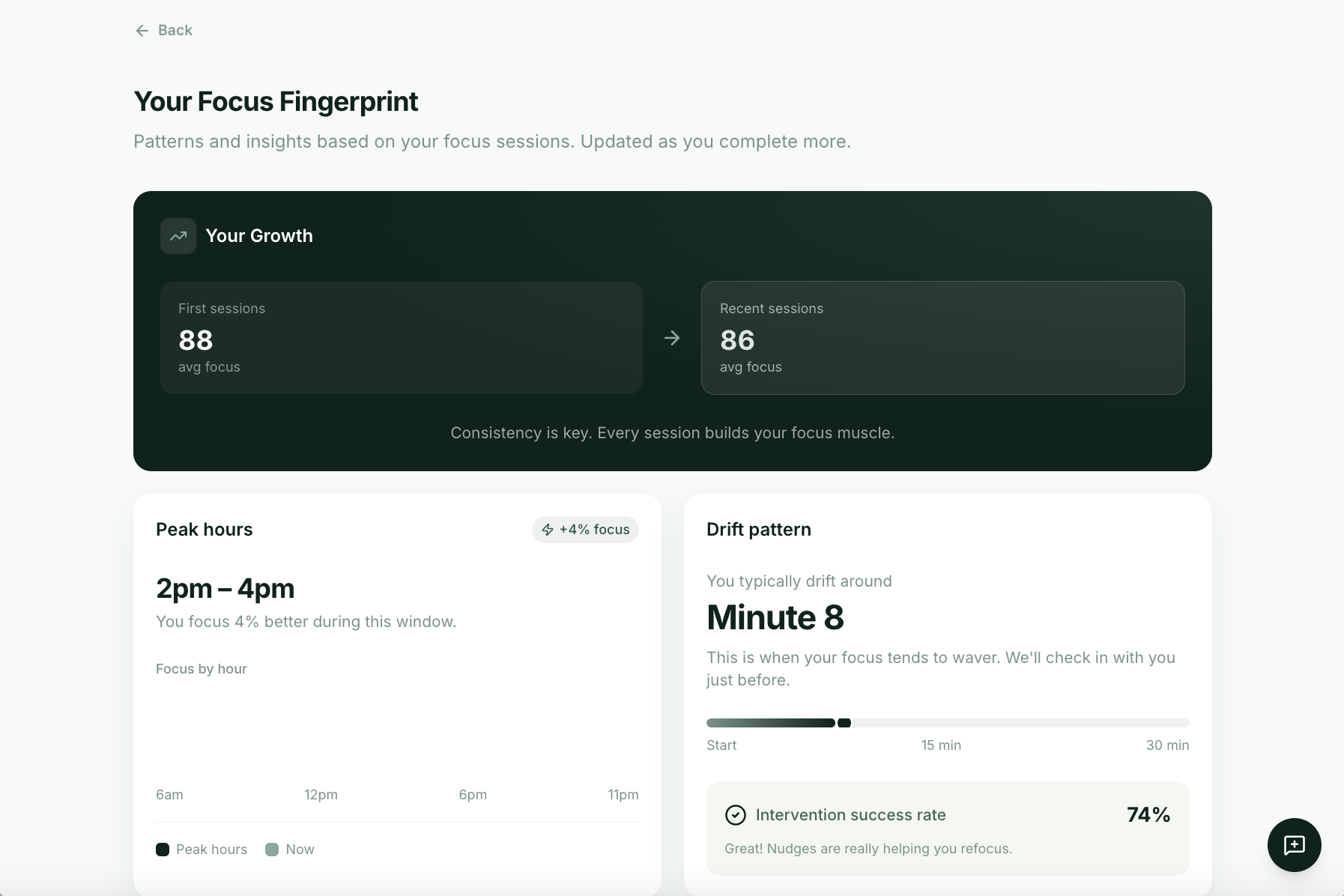
We also defined the Focus Fingerprint as a longer-term part of the experience. Rather than treating every session independently, it gives the product a way to build a picture of how someone focuses over time.
Design & build
Keeping the intelligence in the background
The session experience was designed around lightweight check-ins, with the Anthropic API powering the AI layer behind Stride's interventions. This allowed the product to respond more naturally to what was happening during a session instead of relying entirely on fixed prompts.
We also used Opik to observe and evaluate the AI behaviour throughout development. This helped us understand how interventions were performing and refine the experience without making the product feel overly automated. The intelligence does the work in the background while the interface stays calm and focused.
The outcome
A working product shaped by real sessions
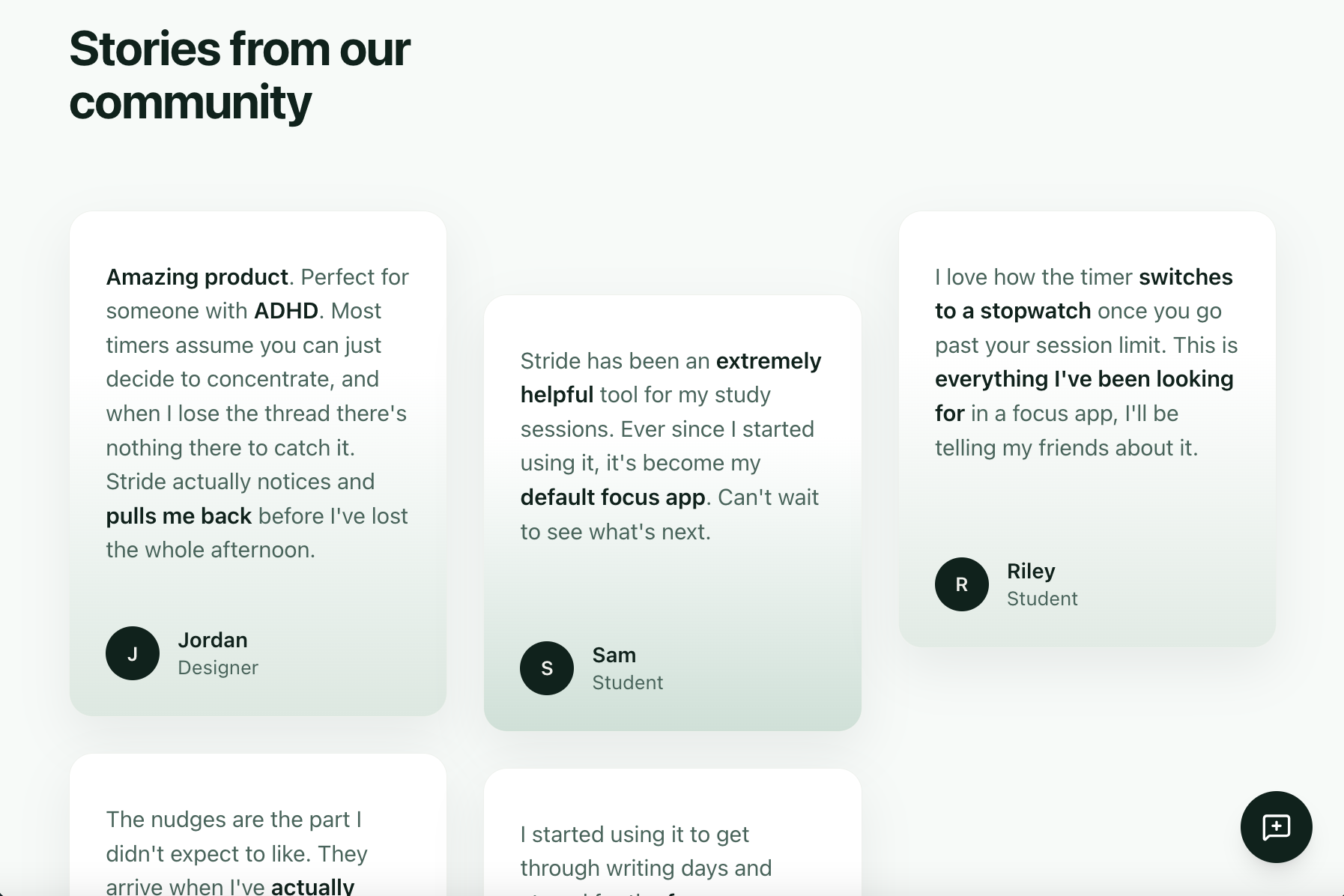
Stride launched with an initial group of users, giving the team real behaviour to learn from rather than relying entirely on assumptions. Early feedback highlighted the value of combining a simple focus timer with occasional, useful notifications.
Session data also showed where people completed sessions, dropped off and responded to interventions. That gave the product a practical foundation for continued iteration and a clearer understanding of how AI could support focus without getting in the user's way.